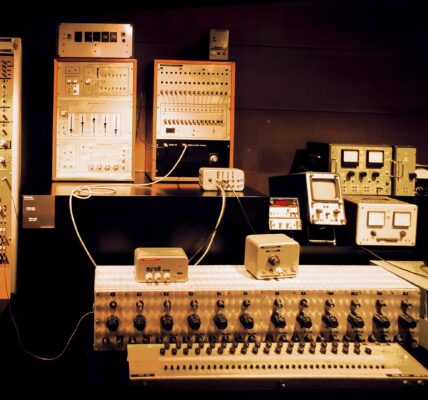

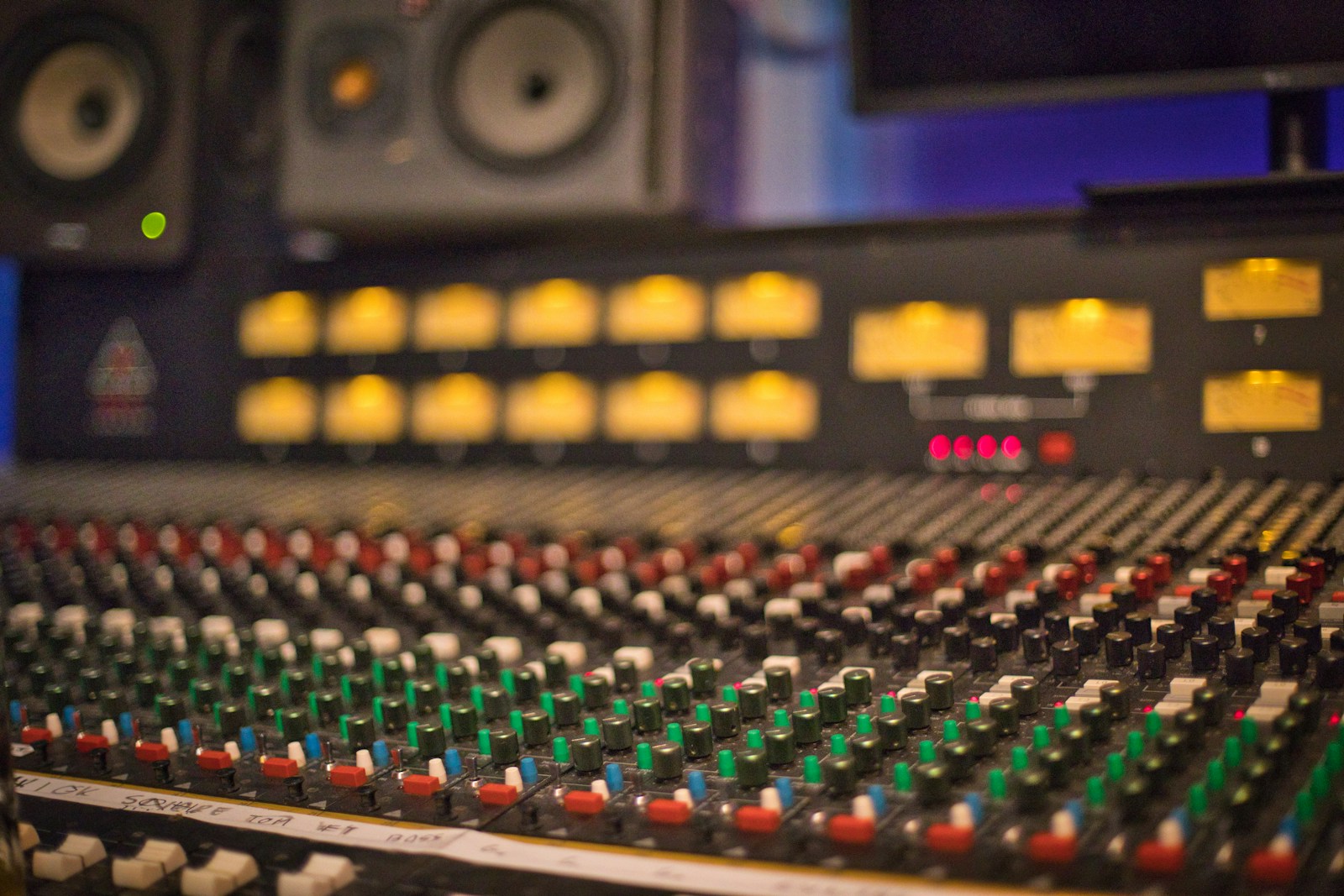
In January, I watched a well-known mastering engineer in Brussels run the same string quartet through two chains back to back: one routed through a pair of Neve 1073 preamps to a Studer A820 at 15 ips with NR off, the other through Grace Design m108 preamps into a Prism Lyra 2 at 96 kHz. He then played both at matched loudness for a small room of producers. Of twelve listeners, seven picked the tape. Four picked the digital. One genuinely could not tell.
That ratio has not moved much since the blind tests Sound on Sound ran in 2007. What has moved is the economics, the tooling, and the honesty of the conversation. The question in 2026 is no longer which format wins. It is which format serves which music, which budget, and which listener, and the answer is messier than either camp likes to admit.
The measurement argument, and why it misses the point
If you open the 2025 AES Journal and look at the specifications of a modern converter such as the Merging Anubis Pro or the Antelope Orion Studio 3, you will find total harmonic distortion figures below 0.0003 percent, dynamic range around 130 dB A-weighted, and frequency response flat from 20 Hz to 40 kHz within a tenth of a decibel. A well-maintained Studer A820 running at 30 ips with Quantegy GP9 tape will show THD closer to 0.3 percent at reference level, dynamic range around 75 dB unweighted, and a gentle high-frequency droop that begins around 15 kHz.
On paper, the tape machine loses by three orders of magnitude. In practice, engineers keep choosing it for drums, bass guitar, vocal sibilance, and anything with a brutal transient. The specifications describe what the machine does when signal is absent or perfectly clean. They say very little about what happens when a snare drum hits 0 VU plus 6 at 50 Hz, which is where musical interest lives.
“Tape is a slow compressor with opinions. A converter is a fast translator with none. You choose your poison based on what the music is asking for.”
— Al Schmitt, in conversation with Tape Op, 2018
What tape actually does to audio
Three physical phenomena account for most of what people call “the tape sound”:
- Magnetic saturation. As signal level rises past reference flux, the magnetisation of the tape oxide stops tracking linearly with input. The result is soft third-order harmonic distortion that peaks on transients and relaxes on sustained tones. On a snare hit this translates to a rounded attack and a faster decay — often perceived as glue.
- Head bump. Below about 100 Hz, interaction between the playback head gap and the tape geometry produces a broad, shallow resonance of 1 to 3 decibels. Bass guitar and kick drum sit better in a mix partly because of this accidental equalisation.
- High-frequency self-erasure. Above roughly 15 kHz, each pass of the record head slightly erases what the previous cycle laid down. The top octave loses air in a way that is not a simple filter, because it is level-dependent.
None of these effects is flattering to every source. A solo piano recorded to a well-aligned Telefunken M15A at 15 ips often gains a warmth that listeners describe as wooden or intimate. The same piano routed through a Prism ADA-8XR at 96 kHz sounds closer to the instrument in the room, with more pedal noise and more high-frequency sheen. Both are legitimate versions. Neither is more accurate, because accuracy was lost the moment a microphone converted acoustic pressure into voltage.
What modern digital does that tape cannot
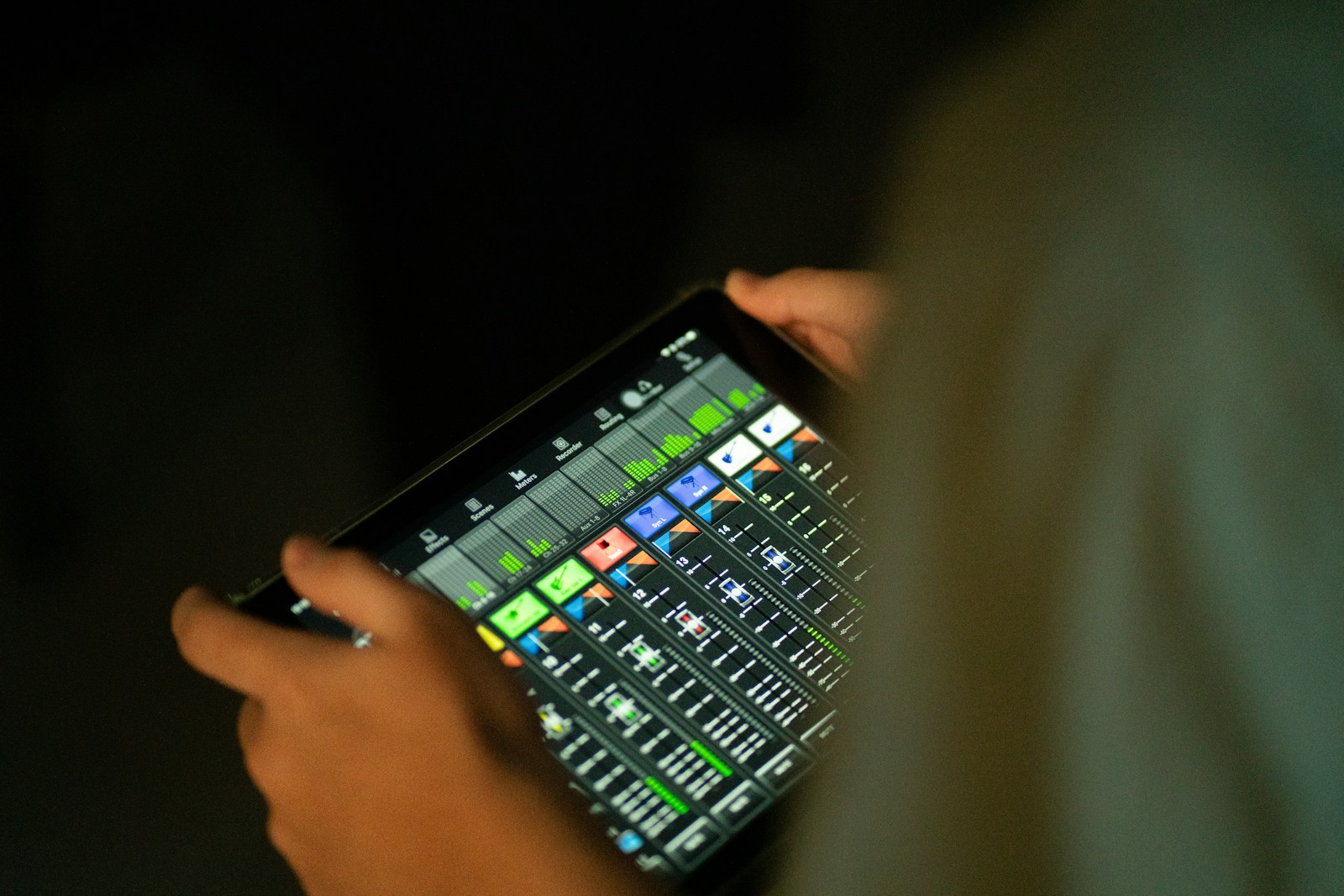
The last three years have seen two converter-level developments that change the practical argument:
32-bit float recording. Manufacturers including Sound Devices, Zoom, and Zaxcom now ship recorders with a dual-ADC architecture that combines two 24-bit converters of different gain, producing a file with roughly 1500 dB of theoretical headroom. In plain language, you cannot clip them. For orchestral recording, where a sudden tutti can be 30 dB louder than a pianissimo cor anglais two bars earlier, this is liberating. No tape machine offers anything similar; tape clips softly, but it still clips.
Room-modelling impulse responses. Convolution reverbs loaded with captures of Boston Symphony Hall, the Concertgebouw, and Liederhalle Stuttgart are now accurate to within 0.5 dB across the frequency spectrum. A classical release mixed in a small London room can be convincingly relocated to a shoebox hall. Tape cannot do this at all.
The hybrid consensus
Talk to the engineers behind recent classical releases from Deutsche Grammophon, Alpha, and Harmonia Mundi and a pattern emerges. Initial capture happens in digital, at 96 kHz / 24-bit or 32-bit float, through boutique preamps and carefully chosen microphones. The mix then passes through an analog summing bus — typically a Rupert Neve 5088 or a Heritage Audio OST-10 — and often spends a single generation on half-inch tape at 30 ips before the mastering stage. The final deliverable is digital.
This is not fence-sitting. It reflects the specific strengths of each medium. Capture wants wide dynamic range, low self-noise, and flexibility to re-edit. Mix bus and mastering want non-linear behaviour, transient softening, and the particular harmonic colour that tape adds to full-band material. Distribution wants digital because the listener is almost always listening on a streaming service or a vinyl cut that itself came from a digital master.
When all-analog still wins
There are genuinely analog sessions being booked in 2026, and the reasons are not nostalgic. A small run of boutique studios — Electrical Audio in Chicago, The Soundbarn in Yorkshire, La Fabrique in Saint-Rémy-de-Provence — specialise in single-day, live-to-two-track tape dates for jazz trios, chamber ensembles, and acoustic singer-songwriters. The rationale is workflow as much as sound: if the band knows there is no editing, the performance tightens. A 2024 study of recording workflow in the Journal of the Audio Engineering Society found that tape-only sessions averaged 23 percent fewer takes per usable master than parallel digital sessions, with no difference in listener preference blind-rated on the final release.
When all-digital still wins
Contemporary classical music that involves electronics, spatialisation, or any form of non-linear editing almost requires digital. Kaija Saariaho’s late orchestral works, Anna Thorvaldsdottir’s 2025 commissions for the Iceland Symphony Orchestra, Olga Neuwirth’s ensemble pieces with live processing — these are unthinkable outside a DAW. The same applies to any production involving MIDI orchestral libraries, which by 2026 ship at sample rates up to 192 kHz and depend on sample-accurate timing that tape cannot provide.
The preamp question, often ignored
Conversations about analog versus digital tend to focus on the recording medium and skip over the element that arguably makes the largest audible difference: the microphone preamplifier. A Neumann U87 routed through a Neve 1073 into a 24-bit converter sounds substantially different from the same microphone through a Grace Design m108 into the same converter, and both sound different again through a Millennia HV-3D. These are all digital-destined signal chains. None of them is analog in the tape sense. All three produce their own sonic signature through the combination of input impedance, gain structure, and discrete-versus-op-amp topology.
A 2023 paper in the Journal of the Audio Engineering Society by Toole and colleagues on microphone preamplifier colouration found that blind listeners consistently identified preamplifier changes as larger than converter changes in A/B tests using the same microphone on the same source. The practical consequence is that an engineer agonising over whether to record to tape or to Pro Tools HDX is, in many cases, agonising over a second-order effect. The first-order decision — what preamp, what microphone, what placement — was made earlier and matters more.
This is one of the reasons the all-digital-versus-all-analog framing tends to mislead. Most of what listeners hear as « the sound of tape » is actually the sound of the preamps and console channels that typically precede tape in a classic workflow. Run the same session through the same preamps into a modern converter, and much of the perceived tape character is preserved.
Mastering in 2026: still a hybrid discipline
The mastering stage is where the analog-digital question is most stable. Almost every major mastering facility in Europe and North America runs a hybrid chain: digital in, analog processing (compression, equalisation, often a Manley Massive Passive or a Kush Electra), then back to digital for limiting and delivery. Bob Ludwig’s studios in Maine, Bernie Grundman in Hollywood, Abbey Road Mastering in London — all work this way, and have for roughly fifteen years.
The reason is not sentimental. Analog processors, particularly variable-mu compressors like the Fairchild 670 or the Manley Variable-Mu, apply level-dependent dynamics in a way that digital emulations still do not fully replicate. Vintage equaliser curves — the Neve 1073 midrange bump, the Pultec EQP-1A low-frequency trick — have been modelled to the second harmonic but fall short on third-order behaviour. For a mastering engineer who charges 400 to 800 euros per track and is expected to deliver a finished master that will sell hundreds of thousands of streams, that last 3 percent of fidelity is worth preserving.
For home producers delivering music directly to streaming platforms, none of this is strictly necessary. A well-designed digital mastering chain — FabFilter Pro-Q 3, Pro-L 2, and a carefully used tape emulation — produces results that are commercially competitive. The difference between this and a hand-mastered analog hybrid is audible but small, and usually swamped by the quality of the underlying mix.
The budget reality
A serviceable all-digital tracking chain for a solo classical instrument in 2026 looks like this: a pair of Lewitt LCT 540S microphones, a Grace Design m108 preamp, a Merging Anubis converter, a reasonably treated room. Total around 7,000 euro, running on a laptop. The equivalent all-analog chain — two Neumann U87ai, a pair of Neve 1073LB, a half-inch Studer A807, proper alignment tools, tape stock — runs closer to 45,000 euro and requires a technician who can still bias a machine. Tape stock itself costs about 120 euro per reel at 15 ips, roughly 30 minutes.
This is why the honest answer to most amateur questions about starting an analog studio is: do not. Start digital, learn to listen, and if you still want tape in three years, you will have the ears to use it. For readers curious about the room side of this equation, we cover that budget question in detail in our home studio acoustics on a budget piece.
A brief history of the wrong question
The analog-versus-digital debate in its current form dates roughly to the introduction of the Sony PCM-1600 at the 1978 AES Convention and the Compact Disc’s commercial launch in 1982. The early digital recordings were, by the standards of the period, genuinely inferior to well-executed analog masters. Anti-aliasing filters had audible phase artefacts. 44.1 kHz / 16-bit quantisation was marginal for the full classical dynamic range. Dither algorithms were primitive. The first generation of digital-recorded classical releases — Telarc’s early output, the 1981 Cleveland Symphony The Pines of Rome among them — had a brittleness in the upper strings that analog masters from Mercury Living Presence a generation earlier did not.
By the mid-1990s, 20-bit converters and better anti-aliasing had closed most of the measurable gap. By 2010, the technical argument for analog was essentially over on paper. What remained was the argument about non-linearity — that analog’s imperfections were musically useful in ways that digital’s mathematical transparency was not. That argument is still live in 2026, but it is narrower than it was in 2005, because digital tools for emulating analog non-linearity have become genuinely good.
The remaining hold-outs for fully analog workflows tend to fall into two camps. The first is boutique studios where the workflow itself is the selling point — clients pay a premium for the discipline of committing to tape. The second is a small number of classical audiophile labels, Reference Recordings and MA Recordings among them, where direct-to-two-track analog capture from minimalist microphone arrays is the house style. Neither camp is growing rapidly, but neither is shrinking, which is itself informative.
What this means for classical listeners
If you collect recordings of, say, Mahler symphonies, you can now compare the 1963 Solti/Vienna Das Lied von der Erde (all-analog, Decca tree, mastered to half-inch tape), the 2004 Boulez/Vienna cycle (digital capture, Sonoma DSD workflow, SACD release), and the 2023 Nelsons/Boston cycle (96 kHz / 24-bit capture, hybrid analog summing, Dolby Atmos mix). They are not simply better or worse. They are different translations of the same repertoire, each shaped by the medium that captured it.
The most interesting development of the last two years is the emergence of Atmos and binaural classical releases that use capture techniques borrowed from film scoring — discrete close-miking combined with height channels fed from ambisonic room captures. Whether that survives as a format or fades the way quadraphonic did in the 1970s is genuinely unclear. What is clear is that the old analog-versus-digital frame is the wrong question. The right question is what chain serves the music that is actually being made.
Frequently asked questions
Does tape actually sound different, or is it psychological?
Measurable differences exist. Analog tape produces third-order harmonic distortion on transients, soft compression at high SPL, and a mild high-frequency roll-off above 15 kHz. These artefacts are not hallucinated, although whether a listener prefers them is subjective.
Is 192 kHz sampling worth it in 2026?
For a classical session with close-miked strings, 96 kHz / 24-bit is the practical sweet spot. 192 kHz doubles storage and CPU load with no audible gain for most production stages, according to the 2019 Reiss meta-analysis on high-resolution audio perception.
Can a fully digital chain match the warmth of tape?
Plugins like Universal Audio Studer A800 or Softube Tape come close on transients and saturation, but the physics of magnetic hysteresis and head bump are still simulated rather than produced. Most A/B tests among engineers return a slight preference for real tape on drums and bass.
What sample rate should I record at for classical music?
96 kHz / 24-bit, or 32-bit float if your recorder supports it. 44.1 kHz is fine if the final release is CD and you trust your anti-aliasing filters, but the overhead from 96 kHz is worth it for the gentler filter slopes alone.
Further reading on Serenade Nocturne
If you enjoyed this piece, our features on young composers reshaping classical music in 2026 and recent album reviews may interest you.
External references
- Reiss, J. D. (2016). A Meta-Analysis of High-Resolution Audio Perceptual Evaluation. Journal of the Audio Engineering Society.
- BBC Radio 3, “The Sound of Tape” documentary, 2024.
- Pitchfork: “The Analog Fetish” feature on contemporary studio workflow.
Tags: analog recording, digital audio, tape saturation, hybrid studio, classical production
Focus keyword: analog vs digital recording 2026 · Rank Math title: Analog vs Digital Recording in 2026: What Actually Sounds Better · Meta: 2026 technical comparison of analog and digital recording: tape saturation, 32-bit float converters, hybrid workflows, and why the answer depends on the source material.