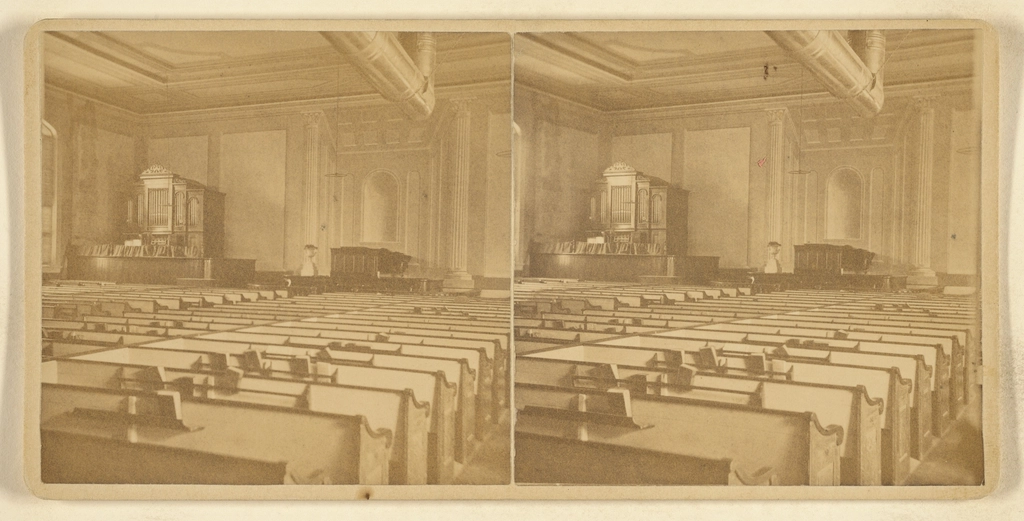
Recording string quartets at high quality has historically required dedicated classical recording venues — converted churches, purpose-built halls, the great recording rooms in London (Air Studios, Henry Wood Hall), Berlin (Teldex Studio) or Paris (Salle Wagram). The technical knowledge required to record acoustic ensembles well, combined with the cost of suitable venues and microphone arrays, kept high-quality classical recording largely out of reach for ensembles working without major label backing. The picture has shifted meaningfully over the past fifteen years. Quartets now regularly produce releases recorded in modest studios, in churches with good but not exceptional acoustics, or even in well-treated home spaces. The results, when the basics are handled correctly, can rival commercial classical releases at a fraction of the cost.
This piece sets out a working approach to recording string quartets in modest spaces, drawn from sessions I have engineered, conversations with working classical engineers, and the available technical literature. The aim is practical and specific.
The room is the recording
The most consequential single decision in recording acoustic ensembles is the room. No amount of microphone or post-production work compensates for a fundamentally bad acoustic. The string quartet is particularly demanding in this respect, because the ensemble blend depends on the room’s natural reverb to bind the four instruments into a coherent texture.
The technically ideal recording room for a quartet has reverb time (RT60) of approximately 1.5 to 2.0 seconds, relatively even decay across the frequency spectrum, no flutter echoes between parallel walls, no audible HVAC noise, and large enough volume that the ensemble does not feel acoustically constrained. Most home rooms fall well short of these criteria, but several practical alternatives exist:
- Converted churches — by far the most common venue for amateur and semi-professional classical recording. Most regions have access to small parish churches that can be rented for modest fees and that offer reasonable acoustic characteristics.
- School and conservatory halls — many education institutions rent out their main halls during off-hours.
- Modest concert halls — smaller venues without major label exclusives often rent at affordable rates.
- Treated home spaces — possible with sufficient room volume and sympathetic surfaces, but requires careful evaluation.
Before committing to a recording session, visit the candidate space and listen — actually listen, with attention — to the natural sound. Clap once and listen to the decay. Walk around speaking and notice how the voice changes. If the space sounds dry, harsh or boxy to your ears, it will sound the same on the recording.
The basic microphone setups
Three classical microphone arrays cover the majority of string quartet recordings: Blumlein, ORTF, and Decca Tree. Each produces somewhat different stereo character, and all are usable for quartet work.
Blumlein pair
The Blumlein pair uses two figure-of-eight microphones at exactly 90 degrees to each other, recorded as left-right stereo. The technique was developed by Alan Blumlein at EMI in 1931 and remains one of the most accurate stereo techniques available. The figure-of-eight pattern provides excellent depth and front-back differentiation, and the 90-degree angle produces accurate stereo imaging without excessive width.
The downside is that the rear lobes of the figure-of-eight pattern pick up substantial room reflection from behind the array, which means Blumlein works only in genuinely good rooms. In dry or boomy spaces, the rear lobe becomes a problem rather than an asset.
Recommended microphones: Royer R-121 (passive ribbon), Coles 4038 (the classic BBC ribbon), Beyerdynamic M160. The Royer SF-12 and AEA R88 are dedicated stereo Blumlein microphones that combine both elements in one body.
ORTF pair
The ORTF technique uses two cardioid microphones at 110 degrees, with capsules 17 cm apart. The configuration was developed at French national radio (Office de Radiodiffusion-Télévision Française, hence the name) and produces a stereo image with good localisation and reasonable rejection of behind-the-array sound.
ORTF is more forgiving than Blumlein in less-than-ideal acoustic spaces, since the cardioid pattern rejects rear sound substantially. It is consequently the most popular technique for amateur and semi-professional classical recording.
Recommended microphones: Schoeps CMC6/MK4 capsules (the standard reference), Neumann KM184, Røde NT5 (budget option), DPA 4011 (premium option).
Decca Tree
The Decca Tree uses three omnidirectional microphones in a T configuration: left, centre and right, with the centre microphone slightly forward of the outer pair. The technique produces a wider, more enveloping stereo image than Blumlein or ORTF and is the standard for full orchestral recording. For string quartet work it is sometimes excessive but produces beautiful results in larger and more reverberant spaces.
Recommended microphones: Neumann M50 (the historical reference), DPA 4006, Sennheiser MKH 8020.
Position, position, position
Microphone placement for the main stereo array is more consequential than microphone choice. The standard starting position for a string quartet is the array placed approximately 1.5 to 2 metres in front of the ensemble, at a height of approximately 2 to 2.5 metres, pointed slightly downward toward the second violin. From this starting position, small adjustments produce large differences in balance and presence.
Move the array closer for a more immediate, intimate sound. Move it farther for more room sound and a more atmospheric character. Raise it for less direct first-violin presence. Lower it for more direct sound. Each movement of perhaps 30 cm produces audible differences; the engineer’s job is to find the position that best supports the specific work being recorded.
The ensemble’s seating arrangement matters as well. Quartets typically arrange themselves with first violin on the listener’s left, second violin to the first violinist’s right (cross-stage), viola further right, cello on the listener’s right. Some quartets use a different arrangement (with viola left of cello, for example), and the engineer should record the arrangement the quartet uses in performance. Microphone positioning should be tested with the actual seating before the recording session begins.
Spot microphones: useful or harmful?
Spot microphones — close microphones on each individual instrument — are a contested topic in classical recording. The major label tradition (Decca, Deutsche Grammophon historically) typically used substantial spot microphone arrays mixed under the main stereo pair to provide additional clarity and balance control. The minimalist tradition (Hyperion, ECM) often uses only the main pair, on the principle that the natural blend of the ensemble produced in the room is the most important characteristic to capture.
For modest-budget recording, the practical answer is usually to record spot microphones if available but use them sparingly. Spot microphones provide insurance against problems (a balance issue that emerges in editing, an unexpected instrument failure, a need to bring out a specific line) without forcing their use in the final mix. Recording without them provides no fallback if problems emerge.
If using spots, place each microphone approximately 30-40 cm above and slightly behind each player, using small condenser microphones (DPA 4099 instrument clips, Neumann KM184) on stands that do not interfere with the players’ physical movement.

Recording session structure
A typical string quartet recording session for a substantial work (a full quartet of 30-40 minutes) requires approximately one to two days of session time. The standard structure:
- Setup and balance check: 60-90 minutes. Position microphones, check signal levels, listen to balance and adjust positions as needed.
- Initial complete take of each movement: a « pass through » recording of each movement to establish the interpretation and identify problems.
- Detail takes: shorter takes of specific passages, multiple alternates of difficult sections.
- Pickup takes: very short takes of single passages or notes that need to be edited in.
For a 30-minute work, expect to record perhaps three to four hours of session material that will be edited down to the final 30-minute release.
Post-production
String quartet post-production is conservative compared to most other recording. The fundamental tasks are editing (selecting and joining takes), light EQ to address minor tonal issues, and very careful management of any fade-ins and fade-outs at edit points. Compression, reverb addition and other heavy processing are usually counterproductive for classical recording — the goal is to preserve and present the natural acoustic event, not to reshape it.
Editing software for classical work generally favours digital audio workstations with good editing capabilities and visualisation. Pyramix from Merging Technologies is the established professional tool. Reaper, Pro Tools and Logic Pro are all serviceable alternatives at lower cost.
The most important post-production skill is the seamless edit. A good edit between two takes should be inaudible to a casual listener, even when the edit point spans a held note that was played slightly differently in the two takes. Achieving this requires close attention to the breath of the players, the bow movements, and the transient material at the edit point.
Realistic expectations
A well-engineered home or modest-studio string quartet recording can equal commercial label releases for many practical purposes (chamber music recital documentation, ensemble portfolio recordings, online distribution). It will not match the very best commercial recordings, which depend on specific venues (St. John’s Smith Square, the Tetbury concert hall, La Chaux-de-Fonds in Switzerland, the De Bijloke in Ghent) and specific engineering teams (Nick Parker for Linn, Robina G. Young for Hyperion historically, the Teldex team in Berlin) that bring decades of accumulated expertise.
The honest comparison is roughly this: a modest-budget recording, well-executed, can occupy a position equivalent to a good but unexceptional major label release, while costing perhaps one twentieth of the equivalent professional production. For ensembles that need quality recordings without major label budgets, this position is genuinely useful.
Equipment budget breakdown
For ensembles wanting to invest in their own recording capability, the equipment requirements are more modest than the marketing of high-end professional gear suggests. A reasonable working setup for string quartet recording can be assembled for between 4,000 and 8,000 EUR, with most of the cost concentrated in microphones.
- Stereo microphone pair: two Schoeps CMC6/MK4 (approximately 4,000 EUR) or two Neumann KM184 (approximately 1,800 EUR) or two Røde NT5 (approximately 600 EUR). The Schoeps pair represents the professional reference; the Røde pair is sufficient for serious amateur work.
- Audio interface: RME Babyface Pro FS (approximately 800 EUR) or the larger RME UCX II (1,500 EUR) for projects requiring spot microphones. The RME interfaces have particularly good preamp quality at moderate cost.
- Microphone stand: a tall boom stand suitable for stereo bar mounting (approximately 200 EUR for a serious model from K&M, Manfrotto or similar).
- Stereo bar: a precision microphone bar for accurate stereo positioning (approximately 100 EUR).
- Cables: high-quality balanced XLR cables in 5 to 10 metre lengths (approximately 100 EUR for a set).
- Headphones: closed-back monitoring headphones — Sony MDR-7506 (100 EUR) or Sennheiser HD-280 Pro (150 EUR).
- DAW software: Reaper (60 EUR for a personal license) or use existing Pro Tools / Logic Pro / Cubase.
- Optional spot microphones: four DPA 4099 instrument clips (approximately 2,400 EUR) or a less expensive equivalent set.
The basic setup without spots and using budget microphones runs approximately 1,500 EUR. The professional-quality setup with Schoeps microphones and DPA spots runs 7,000 to 10,000 EUR. Both produce serviceable recordings; the difference is more in the consistency and refinement of results than in catastrophic quality differences.
Reference recordings worth studying
For ensembles and engineers building expertise in classical recording, several specific recordings provide excellent benchmarks for what is achievable. The Pavel Haas Quartet recordings on Supraphon, particularly the Smetana and Janáček cycles engineered by Petr Vit, demonstrate exceptional quartet recording in moderately-sized European concert halls. The Ebène Quartet recordings on Erato (the Beethoven cycle, the Mendelssohn programmes) show what major label commercial productions sound like when handled by top-tier engineers.
For minimalist recording approaches, the Hyperion catalogue under longtime engineer Robina G. Young (now retired) and her successors provides reference examples of single-pair stereo recording at the highest professional level. The Bartók Quartet’s Hungaroton recordings from the 1970s demonstrate excellent room recording in Budapest churches that are technically modest but musically excellent.
Among more recent releases, the Quatuor Ebène’s Beethoven Around the World documents recordings made in concert halls across multiple continents, with substantial documentation of the technical decisions involved at each venue. The accompanying production notes are useful reading for anyone planning their own recording work.
Misconceptions about classical recording
Several common misconceptions about classical recording deserve correction. The first is that more microphones produce better recordings. They typically do not. The classical recording tradition has consistently favoured minimal microphone arrays — often a single stereo pair — on the principle that natural acoustic blend produces better results than mixed multi-microphone setups. Adding microphones often introduces phase problems, balance complexities, and unnatural spatial relationships that degrade rather than improve the recording.
The second misconception is that high-end vintage microphones produce better results than modern equivalents. The relationship is more complicated. Vintage Neumann U47s, Telefunken ELA M251s, and similar legendary microphones produce distinctive tonal characters that some engineers prefer for specific applications, but modern microphones from Schoeps, DPA and Sennheiser are technically superior in measurement terms. The choice between vintage and modern is aesthetic rather than technical, and modern microphones often produce more consistent and reliable results.
The third misconception is that classical recording is essentially capturing rather than producing. While the goal is more representational than in popular music recording, the engineer makes substantial creative decisions throughout the process — venue choice, microphone position, edit selection, EQ choices, mastering decisions. The « neutral capture » framing is partly a marketing position rather than a technical reality. The most successful classical engineers have distinctive sonic signatures that experienced listeners can identify across releases.
The fourth is that home recording cannot match professional studio recording. The gap has narrowed substantially. Recordings made in good amateur conditions with reasonable equipment and careful technique can compete with mid-tier commercial releases for many practical purposes. The very best commercial recordings still depend on specific exceptional venues and specific exceptional engineers, but the gap below that very top tier is now modest enough that many semi-professional ensembles produce releases that listeners cannot reliably distinguish from commercial productions.
The complete recording workflow, in practice
For ensembles undertaking their first recording project, the full workflow from session planning to final release runs approximately as follows. Pre-session planning begins six to eight weeks before recording with venue selection, equipment confirmation, and repertoire decisions. The detailed score study should be completed before the recording session, with edit points identified and any specific concerns noted in advance.
The recording sessions themselves typically run two days for a full-length album, with movement-by-movement complete takes followed by detail takes for problem passages. The engineer should record substantially more material than the final release will use, on the principle that editing flexibility comes from having multiple usable takes of every passage.
Editing typically requires two to four weeks of work for a full-length album, with the lead engineer or producer making take selections and constructing the edited masters. The quartet should review the edited masters at multiple stages, with feedback incorporated in successive revision cycles. Expect three to five rounds of revision before reaching a final cut.
Mastering follows editing and typically requires one to two weeks. Classical mastering is conservative compared to popular music mastering, with light EQ adjustments, careful management of release-to-release consistency, and minimal compression. The mastered files are then prepared for the various release formats (CD, streaming, high-resolution download) with appropriate metadata embedded.
The total timeline from initial planning to release is typically four to six months for a serious project, with most of that time spent in editing and review rather than in the recording sessions themselves.
Further reading
The Wikipedia entry on audio engineering provides general background. The Audio Engineering Society publishes substantial technical literature on classical recording. The Berklee College of Music Music Production and Engineering programme has published several free educational resources on stereo recording technique relevant to classical work. Our archive on production techniques is at production musicale, with broader instrumental material at techniques instrumentales, and a separate thread on classical recording covering specific repertoire and venue choices.
This article is for informational purposes and reflects personal experience and publicly available recording literature; specific microphone selections and techniques should be adapted to your venue and ensemble.