
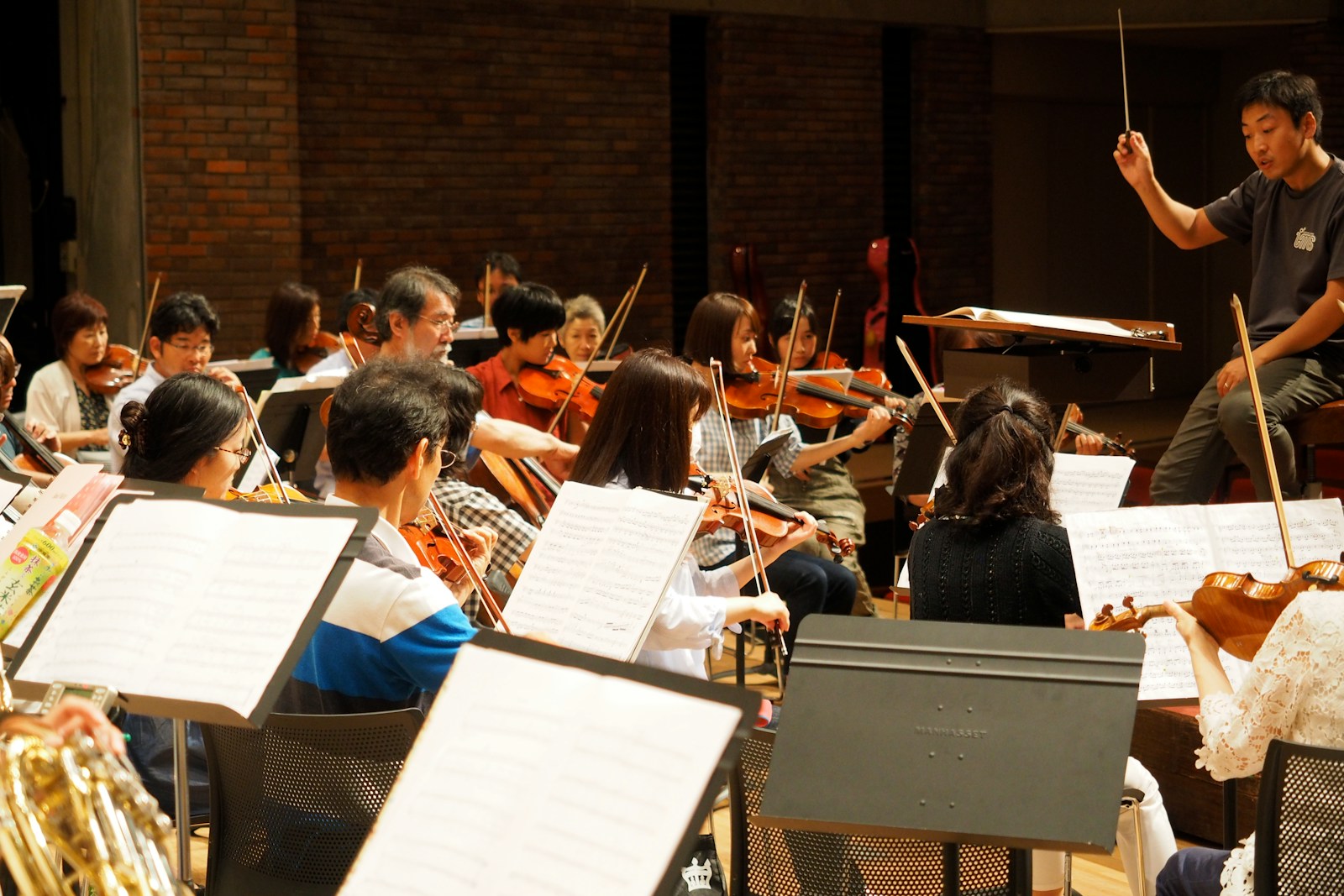
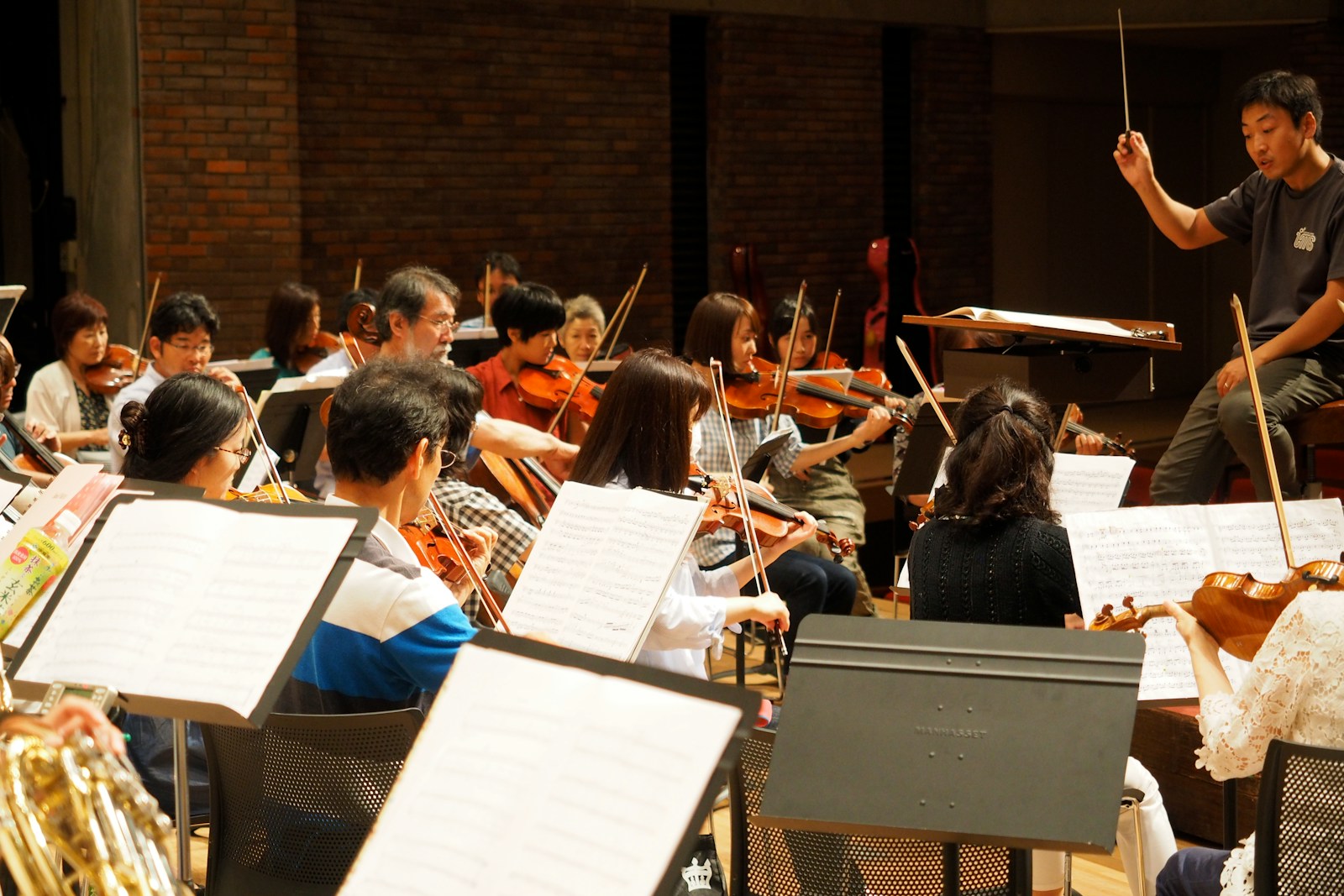
Seventy-two new orchestral works were premiered at the BBC Proms in 2025. That figure is not unusual by historical standards, but the composition of the composer list is. For the first time in the festival’s 130-year history, living women outnumbered deceased composers across the season’s total programme. More than half of those commissions went to composers under forty. This is not tokenism, because the same pattern holds across the Lucerne Festival, the Aspen Music Festival, and Donaueschinger Musiktage — the three festivals that have historically acted as gatekeepers for the European avant-garde.
The generation writing new concert music in 2026 is demographically and aesthetically different from the one that dominated the 1990s and 2000s. It is less concerned with the tonal-versus-atonal quarrels of the Ferneyhough-Adams years. It is comfortable with pop, jazz, film, electronics, and ambient music as source material. It is, in many cases, performing and recording its own work rather than waiting for a festival invitation.
What follows is not a ranking. It is ten composers whose work this year seems to me genuinely worth tracking, chosen from listening through roughly two hundred new scores and recordings since September. All are forty or under in 2026. I have tried to balance genre, geography, and career stage, but any such list is necessarily a snapshot of one listener’s attention.
1. Gabriella Smith (United States, b. 1991)
If any single piece defined the 2025 orchestral season, it was Rewilding, premiered by the San Francisco Symphony in June 2025 under Esa-Pekka Salonen. The work, Smith’s first commission from the SFS, uses recorded bird song as both pre-compositional material and live performance element, with the orchestra imitating, extending, and occasionally arguing with the recorded sounds. Her Breathing Forests, which received its UK premiere at the 2025 BBC Proms, applies similar techniques to the climate-change question without lapsing into program-music literalism.
Smith’s music is not polemical. She grew up doing field recording in the Sierra Nevada and trained at Curtis, and the technical craft is obvious: scoring that balances like Saariaho’s, rhythmic profile closer to Caroline Shaw. For 2026 she has announced a new concerto for cellist Gabriel Cabezas scheduled for November with the Los Angeles Philharmonic.
2. Dani Howard (United Kingdom, b. 1993)
Howard has been appointed inaugural Celebrated Composer with the Bournemouth Symphony Orchestra for the 2025–26 season, a role that spans fifteen performances including the UK premiere of her Saxophone Concerto for Jess Gillam in November 2025, co-commissioned with the Royal Stockholm Philharmonic. The concerto is the most immediately appealing thing she has written, a 24-minute work in three movements that sits somewhere between John Adams’s earlier concert style and a British pastoral lineage going back to Vaughan Williams.
What separates Howard from many of her contemporaries is a genuine idiomatic fluency with orchestras. Her scores are playable on a single rehearsal and sound, as a result, often better in the hall than they look on paper. The London Symphony has programmed her Argentum for its 2026–27 season.
3. Caroline Shaw (United States, b. 1982)
Shaw is at the upper edge of our age bracket but still prolific and still evolving. Her 2025 Grammy for Best Chamber Music / Small Ensemble Performance, awarded for Rectangles and Circumstance, acknowledges what listeners of her Roomful of Teeth work already knew: that she writes for voices with an intimacy that makes most of her peers sound institutional. In early 2025 she released Lady on the Bike with Danni Lee as the duo Ringdown on Nonesuch, a step sideways into electronic cinematic pop that she has described as a separate creative track rather than a crossover attempt.
The piece to watch in 2026 is the UK premiere of The Listeners, an intergalactic oratorio scheduled at the Barbican in November. Early scores suggest Shaw is scaling up her typical chamber vocabulary without losing the intimacy that defines it.
4. Cassie Kinoshi (United Kingdom, b. 1993)
Kinoshi’s route into concert composition came through jazz and through the ten-piece ensemble Seed, which fuses contemporary British jazz with West African and Caribbean rhythmic languages. Her 2024 Proms commission Gratitude startled critics who had filed her under jazz. The orchestral writing is harmonically rich in a way that recalls Steve Reich’s late work, with independent melodic lines moving against sustained textures.
The 2026 project to watch is a co-commission from the Southbank Centre and the Royal Philharmonic Society for a 50-minute work combining orchestra, Seed, and recorded interviews with residents of south London, scheduled for autumn.
5. Joseph Phibbs (United Kingdom, b. 1974)
At the upper edge of the generation but still writing music that surprises. Phibbs’s Piano Concerto No. 2, premiered by Lukas Vondracek with the BBC Symphony in March 2025, is a 28-minute work in four movements with a slow movement that quotes, almost subliminally, the opening of Ravel’s G-major concerto. Critics for The Guardian and The Times both put it on their end-of-year lists. A new symphony has been commissioned by the Halle Orchestra for the 2026–27 season.
6. Hildur Gudnadottir (Iceland, b. 1982)
Best known for her Oscar-winning score for Joker, Gudnadottir has been quietly rebuilding a concert catalogue since signing with HarrisonParrott’s classical division in April 2025. Her upcoming Where to From, a symphonic celebration marking the twentieth anniversary of her debut recording Mount A, is the test. Film audiences know her low-register cello writing. The concert-hall question is whether that vocabulary extends to fifty minutes of abstract form without a narrative crutch.
7. Ethan Soledad (United States, b. 1999)
Soledad is the youngest composer on this list, and the one I am least certain about. His music has been performed by the Cabrillo Festival of Contemporary Music, Musiqa, and Hub New Music, and he won several student prizes in 2024 and 2025. The language is eclectic, drawing on Filipino folk material and Ligeti-style micropolyphony in equal measure. The early works are uneven. They are also, at their best, more adventurous than anything his contemporaries are writing. Name to file away rather than follow weekly.
8. Gabriel Olafs (Iceland, b. 1999)
Olafs’s Polar, released in 2025, is a concept album set in a fictional post-climate-crisis world inspired by video games he grew up playing. That is not an encouraging description on paper. In practice the music is precise, harmonically restless, and far more rigorous than the ambient-adjacent framing suggests. He is touring in 2026 with a chamber ensemble that performs the album live, and a commission from the Iceland Symphony Orchestra is rumoured for the 2026–27 season.
9. Camille Pepin (France, b. 1990)
Pepin has been building a catalogue of orchestral and chamber works since her 2017 prize from the SACEM and has been particularly well served by the French regional orchestras. Her Les Eaux célestes, premiered by the Orchestre National de Lille in April 2025, is a 22-minute tone poem with a harmonic language that sits between Dutilleux and Thomas Adès. Pepin is one of very few composers under 40 whose French pedigree is unmistakable without being retrospective.
10. Anthony Hermus – no, Josephine Stephenson (France/United Kingdom, b. 1990)
Stephenson writes with a directness that is unusual in new concert music. Her song cycle The Mirror Book for mezzo and chamber ensemble, premiered at the Aldeburgh Festival in summer 2025, sets poems by Fiona Sampson and is among the best vocal writing of the season. She has upcoming commissions from the Britten Sinfonia and the Orchestre de Chambre de Paris for 2026.
The performers who are making this generation possible
A list of composers without acknowledgement of the performers who premiere their work is half a list. Three ensembles in particular have been instrumental in moving this generation’s music from score to audience:
The Kronos Quartet remains, in its fifth decade, the most active commissioner of new chamber music in the world, with over 1,200 commissioned works in its history. Their 2025–26 season includes premieres by Gabriella Smith, Angelica Negron, and Mazz Swift. The group’s willingness to tour unfamiliar repertoire internationally has done more for contemporary chamber music visibility than any single institution.
The London Sinfonietta under its current music director George Benjamin commissions roughly fifteen new works per season, often paired with Varese, Boulez, or early Stravinsky to situate contemporary voices historically. Their 2025 Queen Elizabeth Hall residency included premieres by Larry Goves, Naomi Pinnock, and the BBC Young Composer of the Year winner Isobel Anderson.
The Aurora Orchestra has become the unofficial home ensemble for younger composers wanting orchestral-scale visibility. Their Orchestral Theatre programme, performed from memory and often with staging, has premiered works by Dani Howard, Ayanna Witter-Johnson, and Shiva Feshareki, with a profile that attracts a younger audience than traditional concert presentation.
The conductors worth watching are a smaller group. Mirga Grazinyte-Tyla, Thomas Adès (who conducts as actively as he composes), Santtu-Matias Rouvali, and Dalia Stasevska have each programmed substantial new music within their tenures at major orchestras. Without them, the commissions do not reach audiences; with them, new works get multiple performances rather than the old one-premiere-and-shelf trajectory.
The streaming question
New concert music in 2026 reaches listeners primarily through streaming. This is a cultural shift with aesthetic consequences that are only beginning to surface. A premiere recording of a new string quartet is likely to be heard first on Spotify or Apple Classical, usually on a phone or a pair of budget earbuds, often at partial loudness during a commute. Composers who grew up in this listening environment write, consciously or not, for it — scoring with clearer textures, more punctuated rhythms, and more immediate gestural profile than their late-20th-century predecessors.
Whether this is aesthetic impoverishment or simply a new constraint on the craft is genuinely debatable. Anton Webern’s Five Pieces for Orchestra, Op. 10, is in parts literally inaudible on compressed streaming. Gabriella Smith’s Rewilding is not. Both are legitimate artistic responses to the technological conditions of their era.
The one generational loss worth naming is the slow-listening commitment that long-form works required when CDs and LPs were the primary format. A Mahler symphony rewards the listener who sits down for 75 minutes. Very few listeners sit down for 75 minutes in 2026. The response from younger composers has been, by and large, to write shorter movements and shorter overall works — a commercially sensible choice that may turn out to be aesthetically consequential in ways we cannot yet see.
A pattern worth naming
Looking at these ten names, three shifts stand out:
Genre is porous again. Shaw, Kinoshi, Gudnadottir, Olafs, and Smith all have substantial work outside the concert hall. None treats this as slumming. The old line between serious concert music and everything else has weakened to the point of irrelevance for this generation, and programming decisions at major orchestras are following.
The commission pipeline has widened. A decade ago, a first orchestral commission typically arrived in a composer’s late thirties after a doctorate and years of chamber writing. Today, Smith (b. 1991) has had four orchestras premiere her work, Howard (b. 1993) is in residence at a British regional orchestra, and Olafs (b. 1999) is being considered for a national symphony commission. The gatekeepers have, for whatever combination of reasons, lowered the gates.
Geography is less determinative than it was. The list above includes composers working from San Francisco, London, Reykjavik, Paris, and New York. None of them has had to relocate to a single scene to find a career, partly because the commission cycle now operates internationally rather than through two or three national capitals. For broader context on how this generation fits into the longer arc of concert programming, our piece on recent concerts and festivals coverage tracks who is actually being performed where.
Five more names, briefly
The ten above could easily have been fifteen or twenty. Five additional composers I considered at length for the main list and who are worth following:
Angelica Negron (Puerto Rico / United States, b. 1981) writes for acoustic and electronic forces with a specificity of pitch and texture that few of her contemporaries match. Her 2024 Kronos Quartet commission Quimbombo is on every new-music shortlist for the year.
Jessie Montgomery (United States, b. 1981) concluded her residency with the Chicago Symphony Orchestra in 2024 but continues to produce string-forward orchestral works with a rhythmic signature borrowed from American string-band traditions. Her violin concerto premieres at the Gewandhaus in Leipzig in March 2026.
Naomi Pinnock (United Kingdom, b. 1979) writes slow, patient music in the tradition of Feldman and the quiet end of Lachenmann. Her 2025 London Sinfonietta commission the field is woven received six performances across the UK and was the most-streamed new concert work on BBC Sounds in December 2025.
Shiva Feshareki (United Kingdom / Iran, b. 1987) combines orchestral composition with live turntable performance in a way that initially sounds gimmicky and turns out, in performance, to be neither. Her 2025 Barbican residency positioned her as one of the most original figures in current British concert music.
Carlos Simon (United States, b. 1986) is the composer-in-residence at the Kennedy Center for the 2024–27 period and has produced a string of commissions for major American orchestras. His Brea(d)th oratorio received its premiere in 2025 at the Cincinnati May Festival.
The ommission of these five from the main list is not a judgement of their work. It reflects the difficulty of writing ten-name surveys in a field this active; the names above are, in any sensible reading, watchers in their own right.
What I am watching in the second half of 2026
Three events that should not be missed if the programmes are available where you are:
- Gabriella Smith’s cello concerto premiere with the Los Angeles Philharmonic in November 2026.
- Caroline Shaw’s The Listeners UK premiere at the Barbican in November 2026.
- Cassie Kinoshi’s Southbank co-commission in autumn 2026.
Recordings of these performances will, in most cases, appear on streaming services within weeks. If the pattern of the last three years holds, the premiere recordings will be where the conversation actually happens, not the printed scores. For readers thinking about how all this sounds in the studio side of the equation, our feature on analog versus digital recording in 2026 may be worth a look.
This list will look different in 2027. Lists like this always do. But the underlying shift — toward a more international, less gatekept, more genre-fluid concert music ecosystem — is not a trend. It is the new baseline.
External references
- BBC Proms 2025 season programme archive.
- The Guardian classical music coverage.
- The New York Times music section.
Tags: contemporary composers, new music 2026, Gabriella Smith, Caroline Shaw, classical commissions
Focus keyword: young composers 2026 · Rank Math title: Young Composers Reshaping Classical Music in 2026: Ten Names to Watch · Meta: Ten composers under 40 reshaping orchestral, chamber, and vocal music in 2026 — from Gabriella Smith’s Rewilding to Dani Howard’s BSO residency and Cassie Kinoshi’s jazz-classical crossings.

Laisser un commentaire