
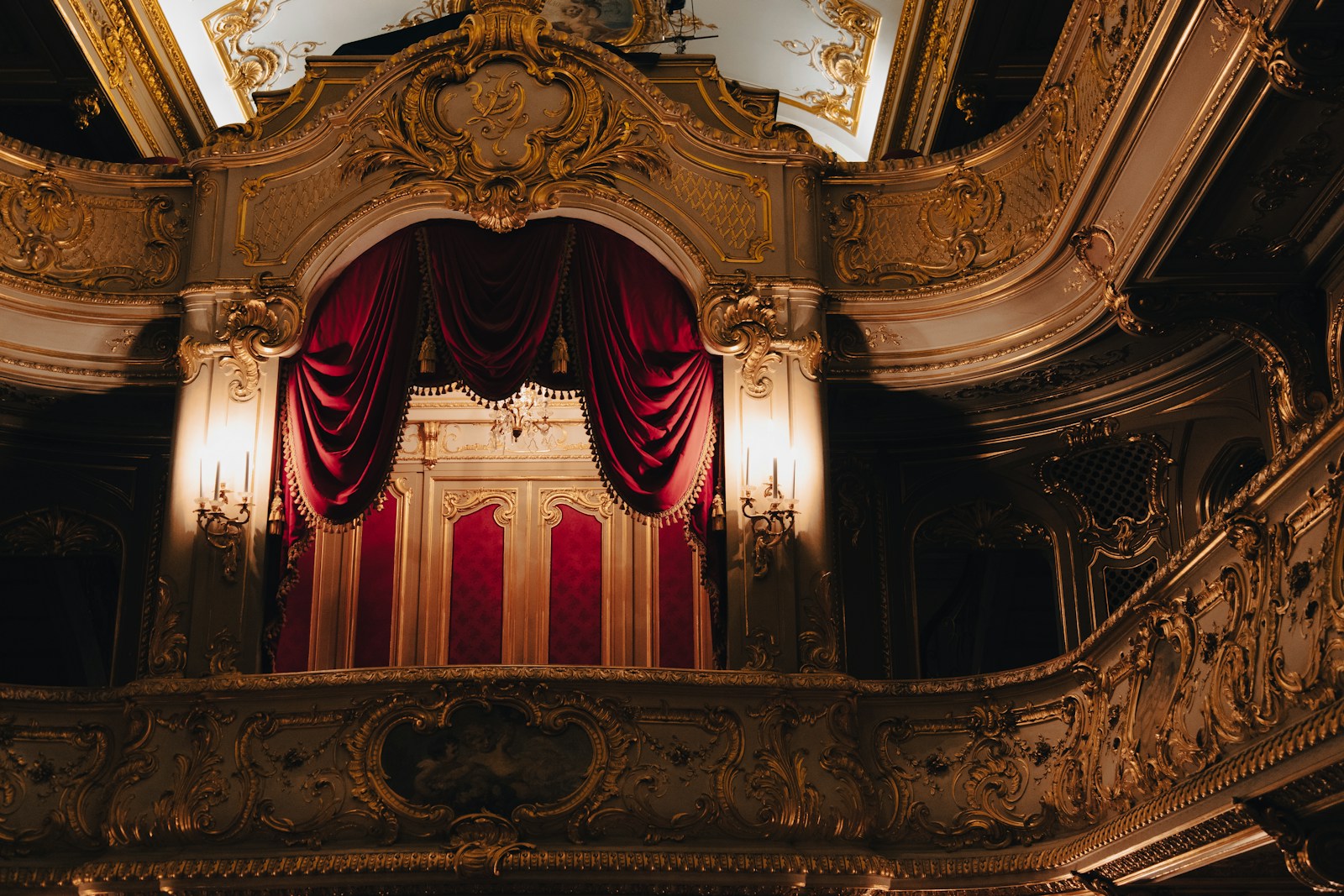
The contemporary opera economy is in an unusually interesting period. Several of the major houses have become genuinely committed to commissioning new work, several festivals have made world premieres a structural feature of their summer programming, and a generation of composers in their forties and fifties is producing works that are entering the touring repertoire in ways that were unusual through much of the late twentieth century. The result is a 2026 season with more substantial new work in active circulation than perhaps any year in recent memory. The challenge for audiences is mostly geographic and informational: knowing which festivals and houses are programming what, and choosing among the options.
This piece is a working map of the contemporary opera season in 2026 at the major European and selected international houses, with attention to world premieres, significant revivals of recent work, and the festival circuit that has become the primary venue for genuinely new work. The aim is practical rather than evaluative.
The major festival circuit
The European summer festival circuit remains the primary engine for new opera commissioning. Three festivals — Aix-en-Provence, Salzburg and Glyndebourne — have particularly substantial commissioning records over the past decade, and a number of secondary festivals (Bregenz, Munich Opernfestspiele, Holland Festival, Ruhrtriennale) supplement the offering.
Festival d’Aix-en-Provence
The Festival d’Aix-en-Provence has become one of the world’s most consistent commissioners of new opera under the directorships of Bernard Foccroulle and Pierre Audi. The 2026 summer programme continues this trajectory, with the world premiere of Kaija Saariaho’s posthumously completed work (in development at the time of her death in 2023) and a substantial production of George Benjamin’s Picture a day like this, which has become one of the most-performed contemporary chamber operas since its 2023 premiere.
The festival’s pattern of pairing new commissions with productions of classics by major directors (recent partnerships with Katie Mitchell, Krzysztof Warlikowski, Ted Huffman) means audiences encounter contemporary work alongside the deepest readings of canonical material.
Salzburg Festival
The Salzburg Festival under Markus Hinterhäuser has continued to programme contemporary opera at a higher level than at any point in the festival’s history. The 2026 summer includes the world premiere of a new work by Heiner Goebbels (whose Songs of Wars I Have Seen in 2007 set a benchmark for contemporary performance) and a much-anticipated revival of Wolfgang Rihm’s Hamletmaschine.
The Salzburg programming model — combining new work with major productions of Mozart, Strauss and the broader Germanic canon — produces the highest concentration of major-house operatic activity in any single August.
Glyndebourne
Glyndebourne Festival Opera has commissioned regularly since the early 2000s, with a recent emphasis on chamber-scale works that suit the festival’s intimate house. The 2026 programme includes a new staging of Anna Thorvaldsdottir’s Aion and a planned premiere by the British composer Mark Simpson, whose Pleasure in 2016 marked one of the more notable English-language opera commissions of the past decade.
The major opera houses
Royal Opera House (London)
The Royal Opera House has continued to balance its largely traditional repertoire with substantial commissioning under Music Director Jakub Hrůša and Director of Opera Oliver Mears. The 2025-26 season included the UK premiere of George Benjamin’s Picture a day like this in the Linbury Theatre, and the 2026-27 season is scheduled to include a new commission from Rebecca Saunders, whose recent orchestral work has placed her among the most distinctive composers of the current European generation.
Bayerische Staatsoper (Munich)
The Bayerische Staatsoper under General Music Director Vladimir Jurowski has been an unusually committed contemporary opera house, with regular world premieres alongside its Wagner-Strauss core repertoire. The 2026 Munich Opera Festival is scheduled to include a major production of Aribert Reimann’s late opera output, with several substantial Reimann revivals planned for the broader European calendar in honour of the composer’s 90th birthday year.
Komische Oper Berlin
The Komische Oper has maintained its identity as the most reliably innovative of the major German houses under intendant Susanne Moser and music director Tobias Tonko. The house’s strong commitment to contemporary work continues into 2026 with several new productions and the ongoing residency of stage director Barrie Kosky in productions across the German-speaking world.
Théâtre du Châtelet and Opéra Comique (Paris)
The two smaller Paris houses have collectively shouldered a substantial share of contemporary opera in France. The Châtelet’s programming under Olivier Py emphasised crossovers between opera, theatre and contemporary performance, while the Opéra Comique’s commissioning relationship with French composers including Michel Tabachnik, Pascal Dusapin and Philippe Manoury has remained consistently productive.
English National Opera
English National Opera’s situation in 2026 remains complicated by the company’s ongoing transition to a primarily Manchester-based model following Arts Council funding restructuring. The 2026 programme reflects the transitional period, with reduced commissioning compared to the company’s earlier output but continued commitment to ENO Studio Live productions of contemporary chamber work.
The North American houses
The Metropolitan Opera under Peter Gelb has expanded contemporary commissioning substantially over the past five years. The 2025-26 Met season included the world premiere of Jeanine Tesori’s Grounded and a major revival of Kevin Puts’s The Hours. The 2026-27 season is scheduled to include premieres by John Adams (whose Antony and Cleopatra from 2022 has continued in revival) and Missy Mazzoli, whose Lincoln in the Bardo represents one of the most-anticipated forthcoming American opera commissions.
Lyric Opera of Chicago, Houston Grand Opera and San Francisco Opera have all continued substantial commissioning programmes, with regular new work alongside the core repertoire. Santa Fe Opera’s 2026 summer programme includes the world premiere of Caroline Shaw’s first full-length opera, an event that has been anticipated since Shaw’s 2013 Pulitzer Prize.
Composers driving the current generation
Several composers have produced bodies of operatic work that are likely to continue defining the contemporary repertoire over the coming decade.
George Benjamin remains probably the most internationally programmed contemporary opera composer, with Written on Skin (2012), Lessons in Love and Violence (2018), and Picture a day like this (2023) all in active circulation across multiple houses. His collaboration with librettist Martin Crimp has produced one of the most consistent composer-librettist partnerships of the past three decades.
The late Kaija Saariaho, who died in 2023, left behind both completed works (L’Amour de loin, Innocence) that continue in active programming and several works in various states of completion that have been gradually entering the repertoire posthumously.
Thomas Adès has continued to compose operatic work alongside substantial conducting and orchestral output. The Tempest and The Exterminating Angel remain in regular circulation; a planned new opera based on Dante’s Inferno has been in development for several years.
Unsuk Chin, whose Alice in Wonderland (2007) was a major commissioning success, has continued to produce work at the boundary of opera and music theatre.
Pascal Dusapin has been one of the most consistent French operatic composers of the past three decades, with Faustus, the Last Night, Penthesilea and Macbeth Underworld among his significant operas.
The Anna Thorvaldsdottir, Hannah Kendall, Missy Mazzoli, Mark Simpson generation now in their forties is increasingly central to the new commissioning landscape, with substantial works performed and several major commissions in development.
The economics of contemporary opera
Contemporary opera operates within an economic model that is genuinely difficult. New productions cost similar amounts to canonical productions but typically have shorter performance lives and smaller audiences, particularly outside of festival contexts. The result is that most new opera commissions depend on combinations of public funding, festival sponsorship, and private foundation support rather than on box-office economics alone.
Several recent funding shifts have affected the landscape. The 2022 changes in UK Arts Council funding reduced ENO’s resources substantially. The German Stadttheater system continues to support a higher density of contemporary commissioning than equivalent French, Italian or British infrastructure. Italian opera houses have been less consistent in contemporary commissioning than their counterparts further north, partly reflecting the distinctive Italian opera-going public’s preferences.
The trend within these constraints has nonetheless been toward more rather than less new work, supported partly by foundations including the Mellon Foundation in the US and the Ernst von Siemens Music Foundation in Europe, which have been substantial commissioners.
Recommendations for new audiences
For someone new to contemporary opera, the most welcoming entry points are probably the chamber-scale works of George Benjamin (start with Written on Skin if available) and Kaija Saariaho (L’Amour de loin remains the most accessible). Festival contexts often produce more polished productions of new work than individual house commissions, since festivals can afford longer rehearsal periods and more selective programming.
The recordings on labels including Nimbus, Wergo, Kairos and Ondine provide substantial documentation of contemporary work for listeners who cannot easily attend performances.
The smaller European houses
Beyond the major houses listed above, several smaller European venues have produced disproportionate amounts of significant contemporary opera over the past decade and deserve attention from serious followers of the form. La Monnaie / De Munt in Brussels under Peter de Caluwe has commissioned consistently across French and Flemish-language operatic traditions, with recent work by Philippe Boesmans, Pascal Dusapin and Annelies Van Parys. The Théâtre Royal de la Monnaie’s house style emphasises director-driven productions that often raise the contemporary opera form above the merely musical to genuinely theatrical achievement.
The Dutch National Opera in Amsterdam, under Sophie de Lint, has built a substantial commissioning record alongside its standard repertoire. Recent productions have included world premieres by Michel van der Aa, whose multimedia operatic work explores the boundaries between opera, film and theatre in ways that few other contemporary composers attempt. Van der Aa’s The Book of Sand and Upload have entered the international touring repertoire and continue to be programmed at festivals across Europe.
The Frankfurt Opera under Bernd Loebe has been particularly committed to American and English-language contemporary opera, with regular productions of work by John Adams, Mark-Anthony Turnage and others. The Stuttgart State Opera and the Hamburg State Opera both maintain strong commissioning records, with the Hamburg house’s recent collaborations with composer Olga Neuwirth producing some of the most distinctive contemporary opera of the 2020s.
The Teatro Real in Madrid under Joan Matabosch has supported contemporary Spanish-language opera through its Iberian focus, including substantial work by Ramón Lazkano, Hèctor Parra and the late Cristóbal Halffter. The Liceu in Barcelona has more recently expanded its contemporary programming, with the 2024 production of Hèctor Parra’s Justice marking the company’s most ambitious recent contemporary commission.
How to evaluate a contemporary opera production
For audiences new to contemporary opera, several practical evaluative criteria help distinguish substantive productions from less successful ones. The first is the libretto-music relationship. The most successful contemporary operas, including those of George Benjamin and Kaija Saariaho, have featured composer-librettist partnerships that develop over multiple works. Benjamin’s collaboration with Martin Crimp, Saariaho’s late collaboration with Aleksi Barrière (her son), and the Adès-Cairns partnership in The Exterminating Angel all produced text that the music is genuinely written for, rather than music applied to pre-existing text.
The second criterion is the production’s relationship to the source material. Contemporary opera frequently adapts established literary or theatrical work (Henry James novellas, Shakespeare plays, contemporary drama, historical events). The most successful productions find specific reasons why the material requires opera as its form, rather than treating opera as a generic ennobling treatment for existing narrative. Works like Adès’s The Tempest and Saariaho’s Innocence have a specific operatic case that distinguishes them from competent but less essential adaptations.
The third criterion is the staging-music relationship. Contemporary opera often pushes the staging toward minimalism, abstraction or non-naturalism in ways that the productions either justify or fail to justify. Katie Mitchell’s productions of contemporary work, the Krzysztof Warlikowski productions in Brussels and Aix, and the Barrie Kosky productions in Berlin have all developed reliable methods for staging contemporary opera that audiences and critics have generally received favourably. The opposite end of the spectrum, where directorial choices undermine rather than reveal the score, is unfortunately also common.
Misconceptions about contemporary opera
Several common misconceptions about contemporary opera deserve correction. The first is that contemporary opera is uniformly difficult or unwelcoming. The works of Benjamin, Saariaho, Adès, Tesori and Mazzoli are accessible to audiences who are reasonably familiar with twentieth-century classical music, and require less specialised preparation than some operas in the established repertoire (late Wagner, Berg’s Lulu). The reputation for difficulty is partly a residue of an earlier mid-century period when serial composition produced operas that did require substantial musical sophistication to follow.
The second misconception is that contemporary opera is primarily an academic or institutional concern with limited audience appeal. The performance and recording data does not support this. Written on Skin has received more than 200 productions worldwide since its 2012 premiere. L’Amour de loin has appeared in major-house revivals consistently since 2000. Mark-Anthony Turnage’s Anna Nicole sold out at Covent Garden in 2011 and has continued to be programmed. The audience for contemporary opera, while smaller than for the standard repertoire, is genuine and growing.
The third misconception is that opera houses must choose between contemporary commissioning and standard repertoire programming. Most successful houses do both. The economic and audience-development rationale for combined programming has been well-established by the major commissioning houses (Aix, Salzburg, Munich, Royal Opera) and is increasingly accepted across the industry.
The fourth is that contemporary opera lacks the emotional power of the standard repertoire. The major works of the current generation (L’Amour de loin, Written on Skin, Innocence, The Hours) routinely produce strong audience emotional response, with many critics arguing that the form is producing some of its strongest work in two centuries. The « lack of emotional power » critique is more about familiarity and listening conventions than about the works themselves.
Recordings: what to listen to before attending
For audiences planning to attend a contemporary opera production, prior listening to a recording substantially deepens the experience. Several specific recording recommendations are worth knowing. Written on Skin has a definitive recording with the Mahler Chamber Orchestra under George Benjamin himself on Nimbus Records, with original cast members Christopher Purves and Barbara Hannigan. Saariaho’s L’Amour de loin is well-served by the Deutsche Grammophon recording with Esa-Pekka Salonen. Adès’s The Tempest has a 2009 EMI Classics recording from the original Royal Opera House production. Innocence has a recording from the 2022 Aix premiere on the Salzburg Festival’s own label.
For composers whose work is less commercially recorded, the broadcast archives of European public radio (BBC Radio 3, France Musique, RAI Radio 3, Bayerischer Rundfunk) provide free access to many contemporary opera productions. The European Broadcasting Union’s catalogue includes substantial contemporary opera content searchable through individual broadcaster websites.
Further reading
The Wikipedia entry on contemporary opera provides broader context. The Operabase database tracks worldwide opera programming and is searchable by composer, work and venue. The BBC Radio 3 long-form opera coverage includes detailed previews of major contemporary productions and substantial broadcast archives. Our archive on contemporary composition is at compositeurs modernes, with broader concert and festival material at concerts & festivals, and a separate thread on contemporary music covering the broader new music landscape.
This article is for informational purposes; opera house programming changes frequently, so verify current schedules and ticket availability directly with each venue before planning attendance.

Laisser un commentaire